Connections
Since 1989, the Polish intelligence sector has been undergoing a democratic transformation which has turned into a continuous institutional change. In the process, the old communist services were abolished and new ones established in parallel with setting up executive and legislative oversight structures. But while the intelligence institutions and the oversight structures, on the whole, meet democratic standards and do not appear to threaten the constitutional system or citizens’ rights in any systemic way, the more recent developments in the sector demonstrate that democracy in Poland has not in fact been consolidated. The state proved incapable of forming any dependable and effective model of control over the security sector in the sense of exercising both political guidance and democratic oversight. The intelligence services and some security institutions continue to enhance their prerogatives in the realm of covert operations, democratic control mechanisms are not sufficiently effective, and the issues of the communist past continue to be a disruptive factor. Under the circumstances, it is hard to single out good practices; rather, one should speak of lessons learned.
Previous Issue
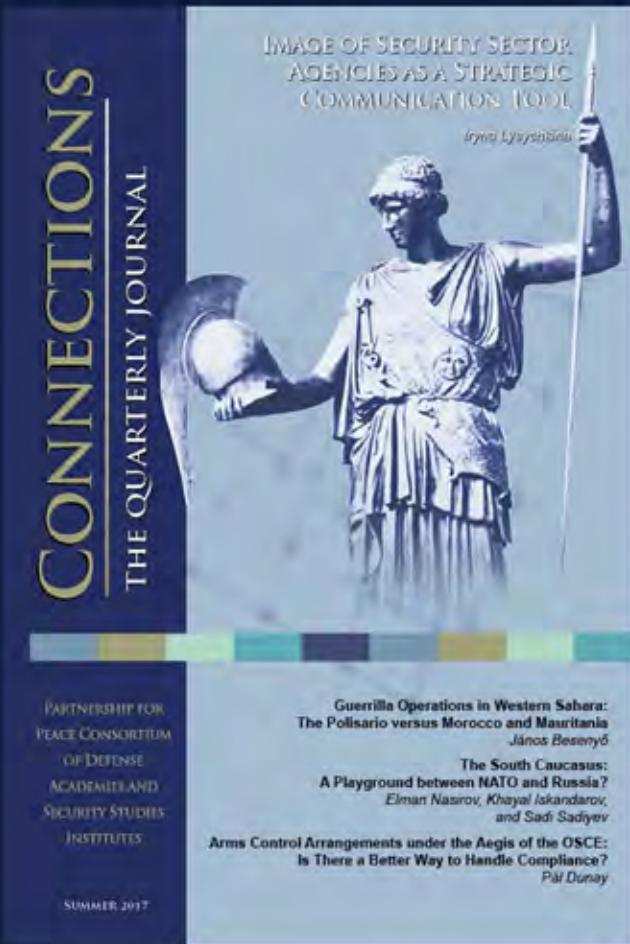 The Summer 2017 issue of Connections presents original research in the role of strategic communication, or StratCom, in shaping the image of a security sector organization with examples from the experience of the US and Ukraine, lessons learned from the decades long conflict in Western Sahara, and the interplay of NATO and Russia's interests in the...
Read More
The Summer 2017 issue of Connections presents original research in the role of strategic communication, or StratCom, in shaping the image of a security sector organization with examples from the experience of the US and Ukraine, lessons learned from the decades long conflict in Western Sahara, and the interplay of NATO and Russia's interests in the...
Read More