
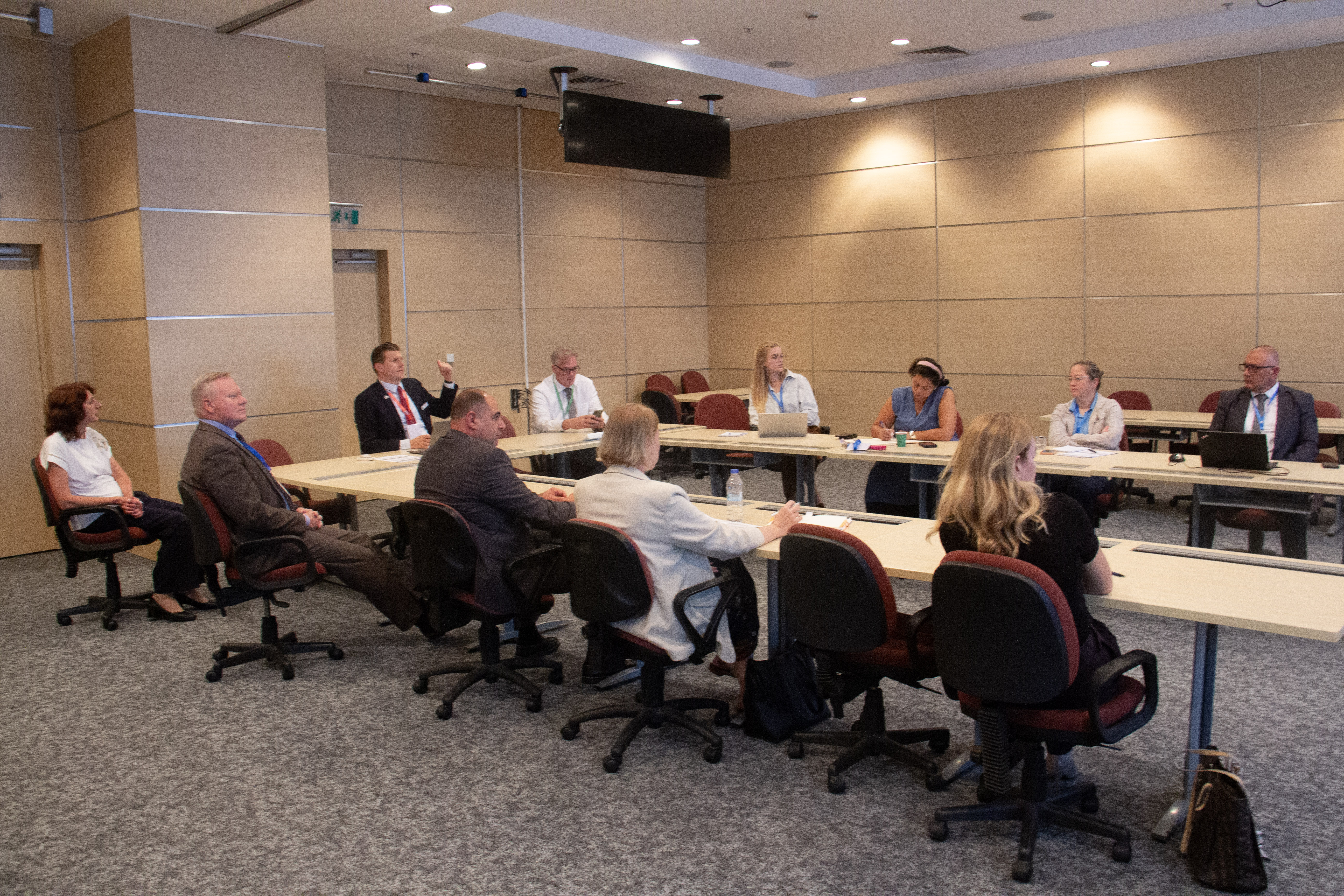
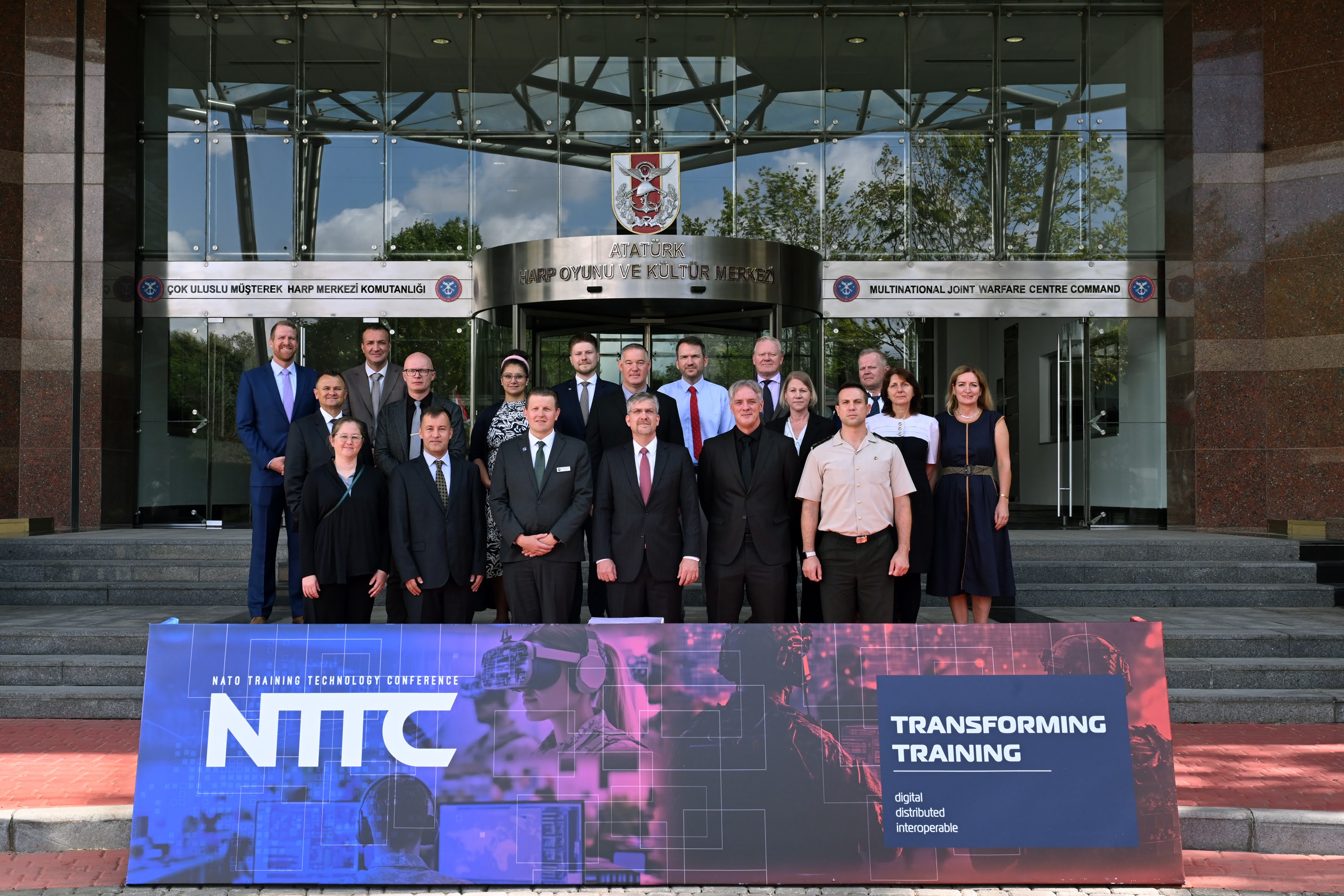
Istanbul, Türkiye - The Partnership for Peace Consortium’s Advanced Distributed Learning (ADL) Working Group convened in from 8–12 September 2025 in Istanbul, hosted by the Maritime Security Centre of Excellence and co-located with the NATO Training and Technology Conference (NTTC) and the NATO Learning and Technology Interoperability Group (NLTIG). Bringing together representatives from nearly 30 Allied and partner nations, NATO bodies, and Centres of Excellence, the meeting provided a key opportunity to align policy, innovation, and practitioner perspectives on the future of education, training, exercises, and evaluation (ETEE) in increasingly complex and resource-constrained security environments.
Discussions in Istanbul reflected a shared recognition that military learning systems must adapt more rapidly to operational realities, including the need to train at scale, maintain continuity under pressure, and support multinational interoperability. National briefings and syndicate discussions highlighted growing reliance on instructor-supported online learning, asynchronous delivery models, and competency-based approaches embedded within institutional personnel systems. Participants also revisited insights from recent conflicts, reinforcing the relevance of the ADL Working Group’s “Train While We Fight” line of effort and the importance of resilient, flexible learning ecosystems that can function alongside ongoing operations.
Two major collaborative outputs discussed during the meeting have since been finalized and released. The PfPC Info Paper, AI in Military ETEE ADL: A Toolkit for Local Reflection, translates years of Working Group dialogue into a practical, scenario-driven framework to support responsible adoption of artificial intelligence in military learning. Rather than prescribing specific technologies, the paper provides institutions with a shared scenario template, a military-specific AI evaluation rubric, and a structured reflection process that helps leaders, instructors, and technologists assess mission relevance, pedagogical value, ethical considerations, interoperability, and security risks. Designed to support both internal decision-making and multinational knowledge exchange, the toolkit enables institutions to move beyond isolated pilot projects toward scalable, policy-aligned implementation of AI-enabled ADL.

In parallel, the Multinational Capability Development Campaign (MCDC) eLearning Catalog Concept Proposal, also finalized following the Istanbul discussions, outlines a federated approach to discovering, describing, and sharing digital learning content across nations. The proposal responds directly to challenges identified by the ADL Working Group, including fragmented repositories, inconsistent metadata, and limited visibility of existing courses. By emphasizing common standards, governance principles, and national ownership of content, the concept seeks to improve interoperability while respecting security and sovereignty requirements. Together, the two products reflect a shift within the PfPC ADL community from exploration to execution—providing concrete tools that support collaboration, reduce duplication of effort, and strengthen the collective capacity of Allied and partner institutions to deliver effective, mission-relevant education and training.
You can download the latest Info Papers here.
You can learn more about the Advanced Distributed Learning Working Group here.
Next News

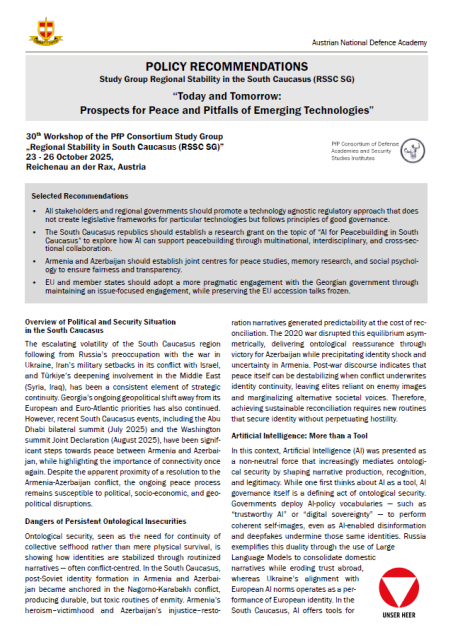
Reichenau an der Rax, Austria - The 30th workshop of the study group "Regional Stability in the South Caucasus" took place this year from October 23 to 26 at the Reichenau Seminar Center and was dedicated to the topic "Today and Tomorrow: Prospects for Peace and Pitfalls of Emerg
Previous News

GDYNIA, Poland—The Partnership for Peace Consortium (PfPC) convened military leaders, educators, and security and defense practitioners from 25 nations and NATO in Gdynia, Poland, from De. 9-12, 2025, for the 2025 PfPC Capstone.