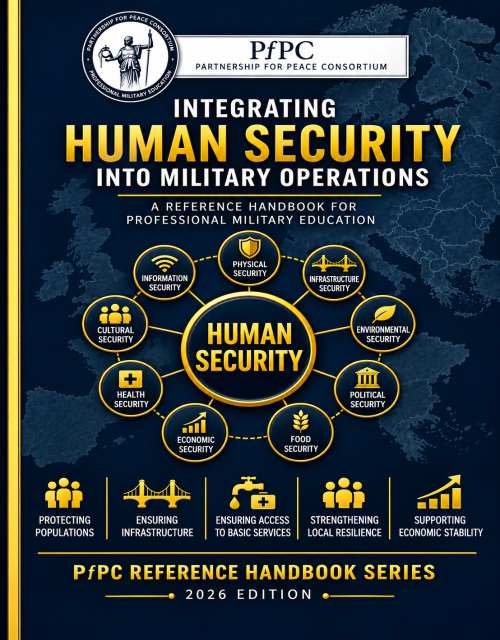
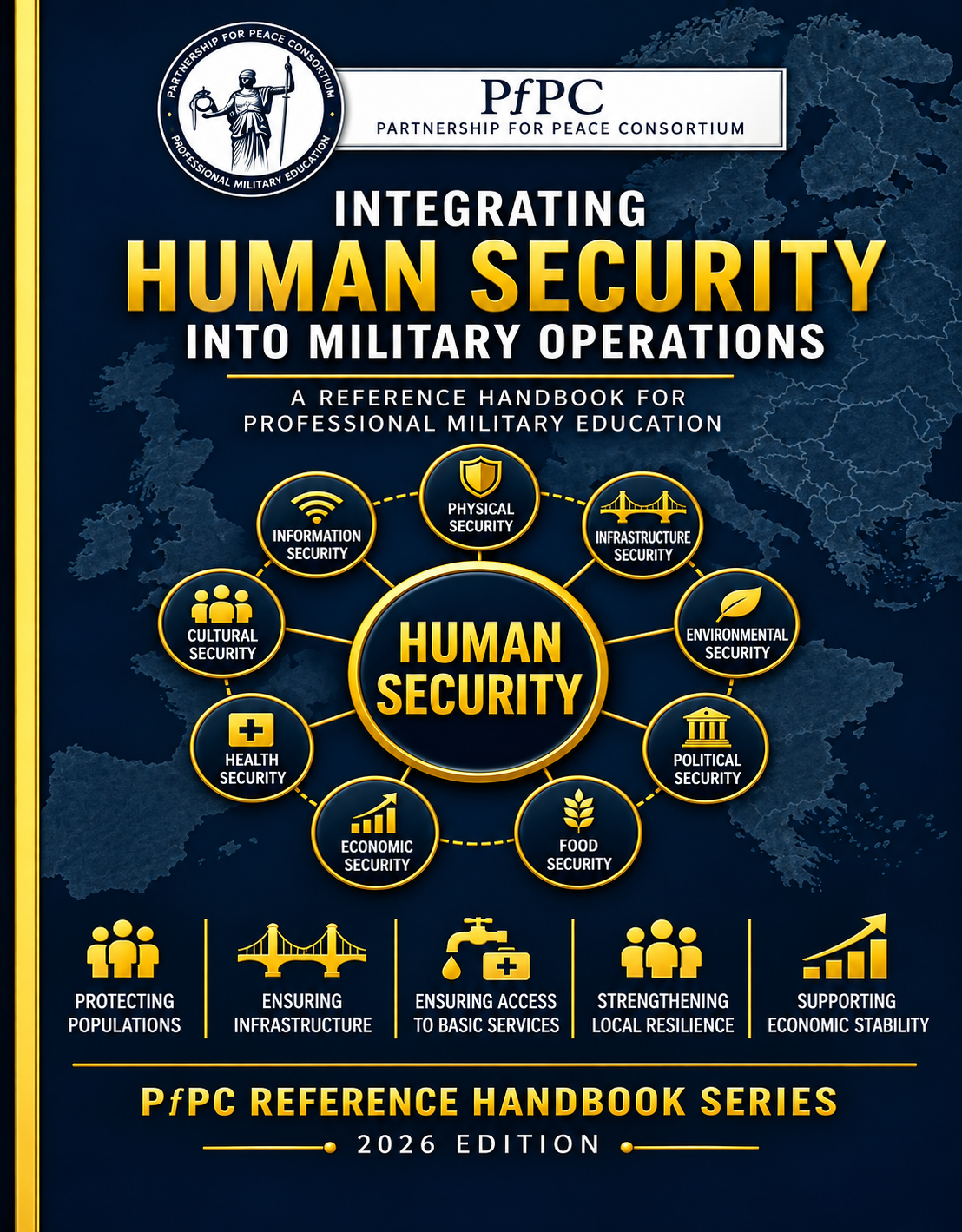
The Partnership for Peace Consortium of Defence Academies and Security Studies Institutes (PfPC) has published a new reference handbook designed to support the integration of Human Security considerations into Professional Military Education (PME) across NATO Allies and partner nations.
Edited and published by the Canadian Defence Academy on behalf of the PfPC Human Security in Operations Working Group, the handbook provides a common framework for understanding how military forces can contribute to Human Security while enhancing operational effectiveness, resilience, legitimacy, and mission success.
The publication addresses an identified gap in professional military education by translating NATO's Human Security Approach and Guiding Principles into practical concepts, planning considerations, and military tasks. It presents Human Security as an operational perspective that enables commanders, staff officers, and military educators to better understand the human environment and the interconnected factors shaping security outcomes in contemporary conflicts and crises.
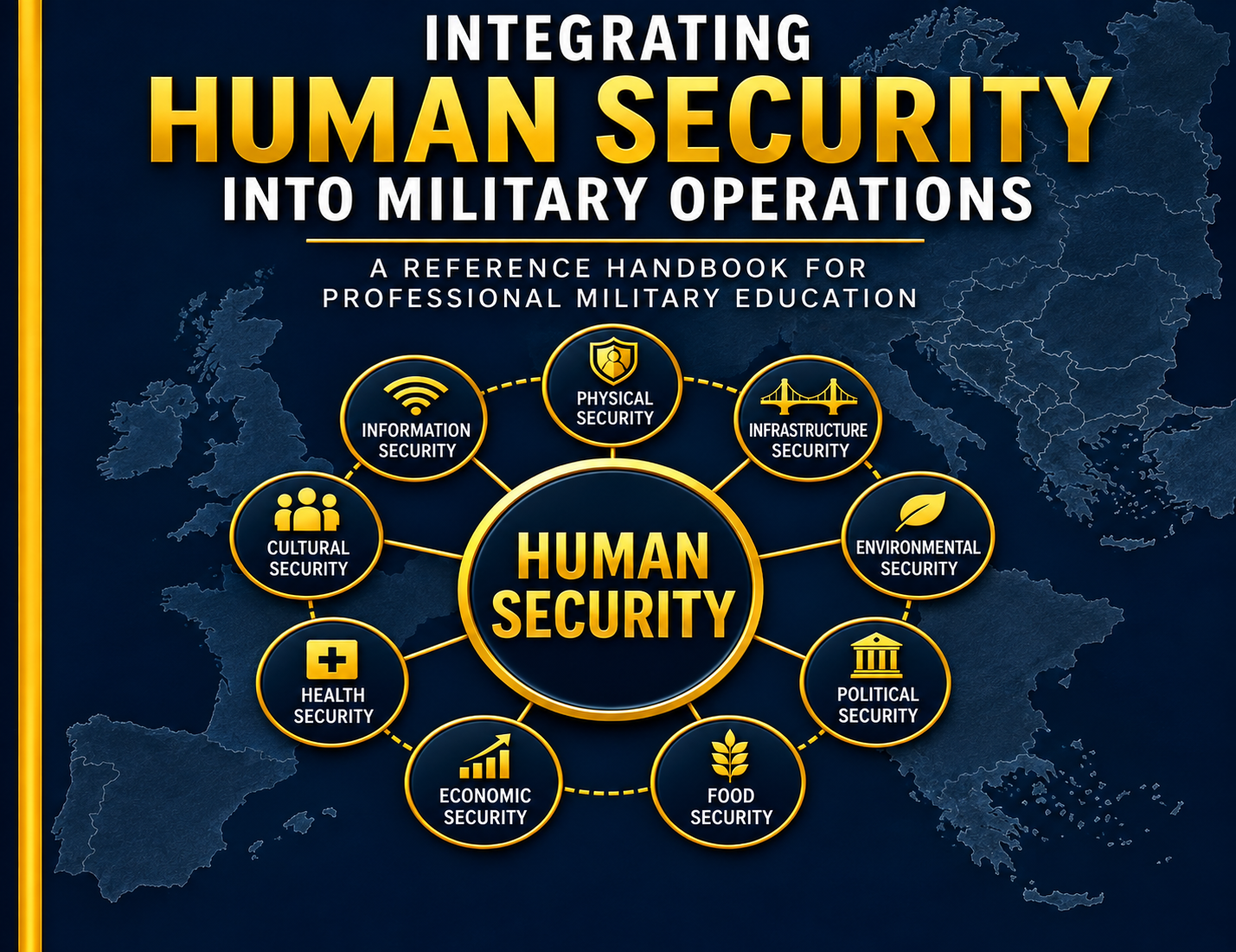
The handbook identifies nine Human Security Factors: Physical, Infrastructure, Political, Economic, Cultural, Health, Food, Information, and Environmental Security. Together, these factors provide a structured framework for assessing vulnerabilities, strengthening resilience, protecting populations, and supporting mission objectives across the full spectrum of military operations.
A key contribution of the publication is its emphasis on operational relevance. It demonstrates how incorporating Human Security considerations can enhance situational awareness, inform military planning and decision-making, mitigate risks, and contribute to NATO's broader resilience and deterrence efforts. In addition, it offers practical guidance on integrating Human Security into operational planning, staff functions, risk assessment, and military education.
Developed through multinational collaboration involving experts from NATO, Allied and partner nations, academia, and international organisations, the handbook promotes a shared understanding of Human Security and strengthens intellectual interoperability across the Alliance and its partner community. It is intended for defence academies, staff colleges, PME institutions, commanders, practitioners, and policymakers preparing military leaders for increasingly complex operational environments.
As strategic competition, hybrid threats, information manipulation, infrastructure vulnerabilities, and societal resilience become increasingly important in the security and defence landscape, the handbook underlines the need to understand and address the human dimension as an integral part of military effectiveness and strategic advantage.
The handbook reflects the PfPC's continued commitment to advancing defence education, fostering interoperability, and supporting NATO's adaptation to emerging security challenges.
Previous News

From August 4-6, 2026, the Partnership for Peace Consortium’s (PfPC) Irregular Warfare and Hybrid Threats Working Group, led by Dr. Kevin D. Stringer and Maj.