Connections
Contents
Emerging Security Challenges: An Introduction
Policy and the Internet of Things
Industry and Policy: Partnerships in Disruptive Times
Nanotechnology and Global Security
Hybrid Warfare and the Changing Character of Conflict
Making Sense of Hybrid Warfare
Cybersecurity has steadily crept to the top of the national security agenda. Simultaneously, a merger of the physical and virtual worlds is noticeably underway. A confluence of technologies has come together to make this possible under the rubric known as the Internet of Things (IoT). This merger will bring sensors and computing devices totaling in the billions to connect objects together in a network that does not require human intervention, along with which will come much vaunted benefits, knowable risks, uncertainties and considerable security dilemmas. Using the past as a predictor of future behavior, a vast increase in hackable devices will create equally vast vulnerabilities that will now touch the physical world. Yet the IoT will also present opportunities that are just now being imagined, likely making the Internet revolution seem small by comparison. While technological growth often appears to outpace policy, government retains the power to convene and ultimately to regulate. This article examines why policymakers should care about the IoT, the significant trends for the next five to ten years, and likely security implications stemming from those trends. The article finalizes with an overview of policy considerations.
Previous Issue
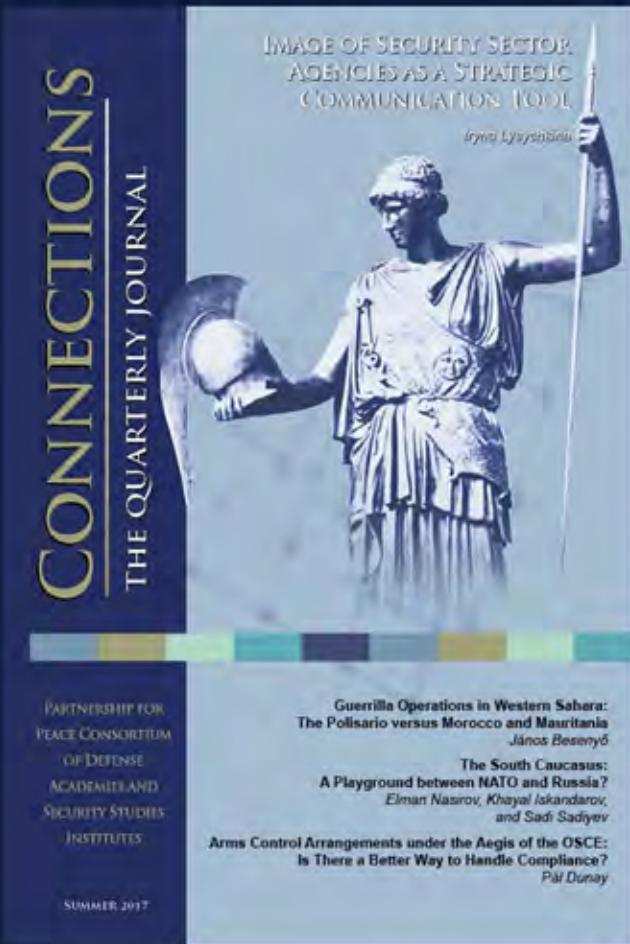 The Winter 2016 issue of Connections presents original articles on Russia's hybrid warfare toolset and its Soviet predecessors, the crisis in Ukraine, caused by the annexation of Crimea and the Kremlin-backed separatist forces in South-Eastern Ukraine, the enduring validity of Clausewitz's "On War" for modern conflict, and a review of university pr...
Read More
The Winter 2016 issue of Connections presents original articles on Russia's hybrid warfare toolset and its Soviet predecessors, the crisis in Ukraine, caused by the annexation of Crimea and the Kremlin-backed separatist forces in South-Eastern Ukraine, the enduring validity of Clausewitz's "On War" for modern conflict, and a review of university pr...
Read More