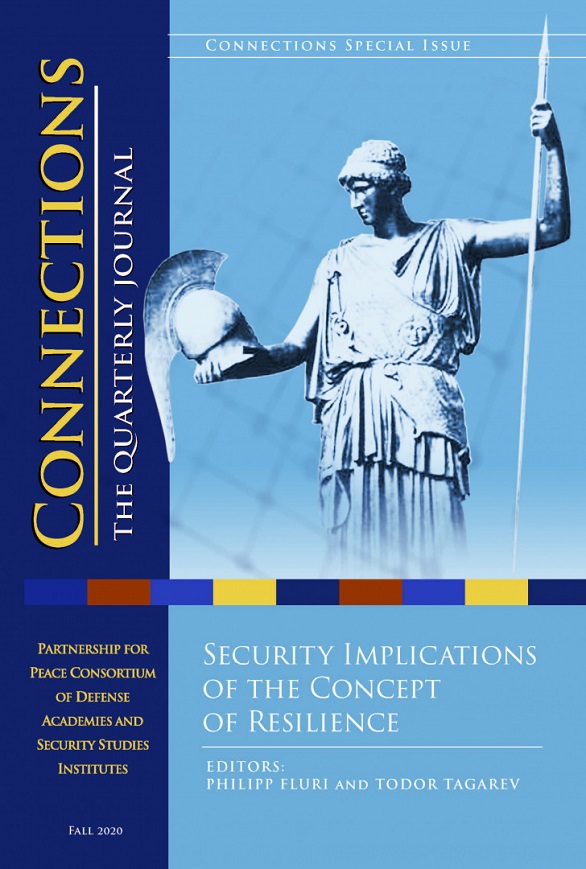
Connections
Contents
Karachi: Organized Crime in a Key Megacity
Global Dimensions of Organized Crime and Ways of Preventing Threats at International Level
Transnational Organized Crime – Latvian Challenges and Responses
Maritime Piracy as a Form of Organized Crime: A Strategic Management Approach
Cyberspace as the Environment Affected by Organized Crime Activity
The Mobilization and Recruitment of Foreign Fighters: The Case of Islamic State, 2012–2014
Abstract:
The article aims to articulate key micro-level factors that contribute to the resilience to conflict of South and North Korean communities living in the Seoul metropolitan area. The concept of resilience at the micro-level is defined as having three aspects: recognition of communal and individual interdependence, quality of interaction, and perceptions promoting cooperation and trust. The problem-solving workshop conducted with North Korean diaspora members and their South Korean counterparts served as an opportunity to assess communal resilience to conflict. The findings show that resilience may improve by enabling quality interaction among community members and the introduction of education that promotes understanding, tolerance, and respect.
Previous Issue
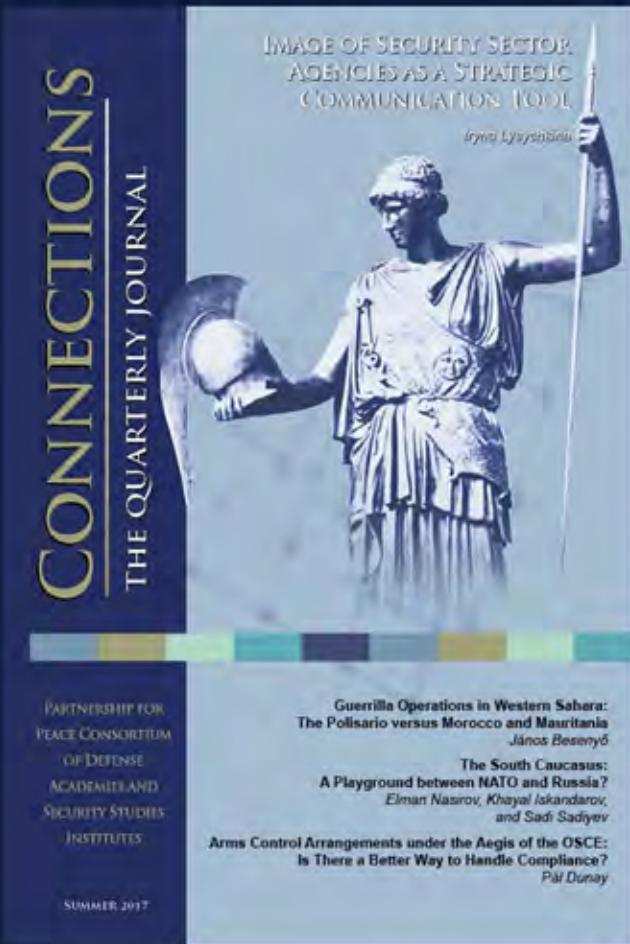 Advances in sensors, communications, computing, nano- and bio-technologies, along with new strategies and operational concepts, challenge our policy-making capacity. The Spring 2016 issue of Connections presents the Emerging Security Challenges Working Group of the PfP Consortium and reflections of some of its members on the security and policy imp...
Read More
Advances in sensors, communications, computing, nano- and bio-technologies, along with new strategies and operational concepts, challenge our policy-making capacity. The Spring 2016 issue of Connections presents the Emerging Security Challenges Working Group of the PfP Consortium and reflections of some of its members on the security and policy imp...
Read More