Connections
Contents
Karachi: Organized Crime in a Key Megacity
Global Dimensions of Organized Crime and Ways of Preventing Threats at International Level
Transnational Organized Crime – Latvian Challenges and Responses
Maritime Piracy as a Form of Organized Crime: A Strategic Management Approach
Cyberspace as the Environment Affected by Organized Crime Activity
The Mobilization and Recruitment of Foreign Fighters: The Case of Islamic State, 2012–2014
Maligned actors use fake social media accounts and automated tools, also called computational propaganda, to launch disinformation operations. While technology companies and researchers continue to advance computational propaganda detection, they also know that eradicating social bots and disinformation is impossible. Since computational propaganda continues to increase, governments need to focus their efforts on developing policies that decrease citizen demand for disinformation. The purpose of this article is to explore disinformation at the intersection between technology and citizen resiliency. First, the current landscape will be explored to understand the impact of disinformation on society and its citizens. Second, the effect of technology on the supply of disinformation will be examined. Third, methods to decrease the demand for disinformation will be considered to increase citizen resiliency.
Previous Issue
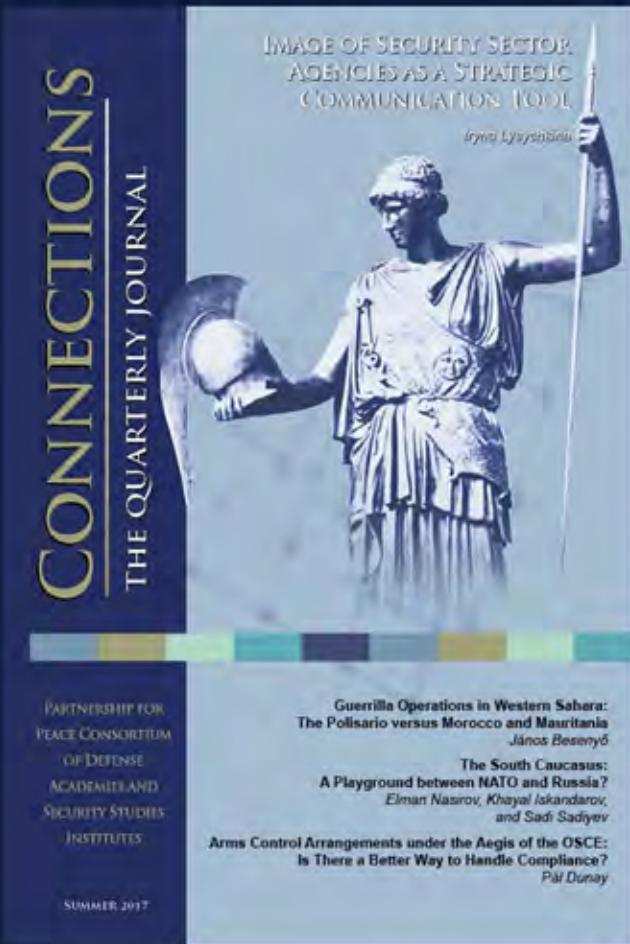 Advances in sensors, communications, computing, nano- and bio-technologies, along with new strategies and operational concepts, challenge our policy-making capacity. The Spring 2016 issue of Connections presents the Emerging Security Challenges Working Group of the PfP Consortium and reflections of some of its members on the security and policy imp...
Read More
Advances in sensors, communications, computing, nano- and bio-technologies, along with new strategies and operational concepts, challenge our policy-making capacity. The Spring 2016 issue of Connections presents the Emerging Security Challenges Working Group of the PfP Consortium and reflections of some of its members on the security and policy imp...
Read More