Connections
Contents
Karachi: Organized Crime in a Key Megacity
Global Dimensions of Organized Crime and Ways of Preventing Threats at International Level
Transnational Organized Crime – Latvian Challenges and Responses
Maritime Piracy as a Form of Organized Crime: A Strategic Management Approach
Cyberspace as the Environment Affected by Organized Crime Activity
The Mobilization and Recruitment of Foreign Fighters: The Case of Islamic State, 2012–2014
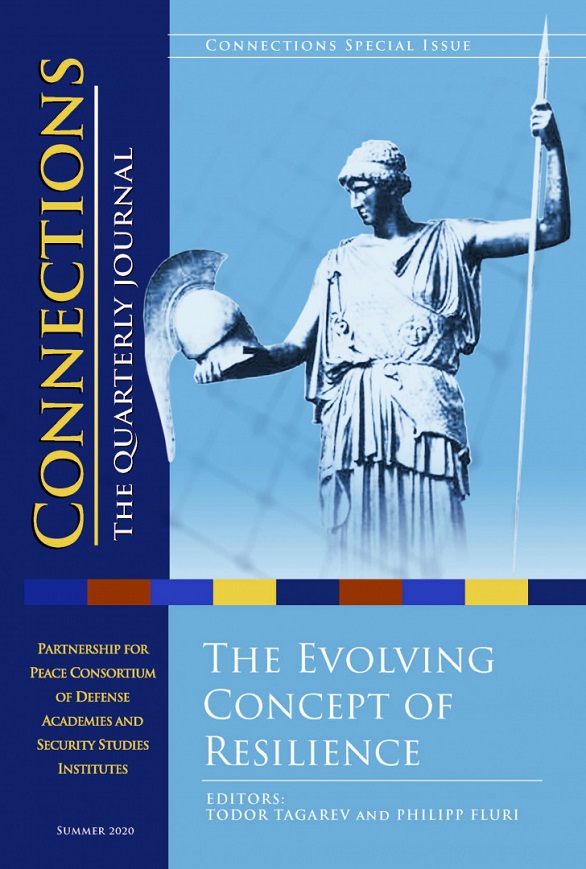
The emerging challenges for the resilience of nations and societies, as well as for communities and individuals, are numerous and diverse. Nevertheless, the multiplicity of definitions existing in the literature for resilience, as well as the discrepancies between them, make it difficult to evaluate, operationalize, or to compare resilience research findings across studies. The purpose of the current article is to provide a coherent and general definition for the term resilience and other sub-types of this general concept. This will be achieved through presenting a two-dimensional matrix, divided into four content categories (social, economic, political, and military) and three level categories (individual, community, and State). The recent COVID-19 pandemic may advocate Global as a fourth level, yet its full implication is too premature to be assessed. The proposed matrix generates twelve cells, which present twelve different sub-types of resilience. Subsequently, this matrix can be used for a comprehensive definition of resilience and its sub-types, as well as for possible assessments of resilience at its various faces.
Previous Issue
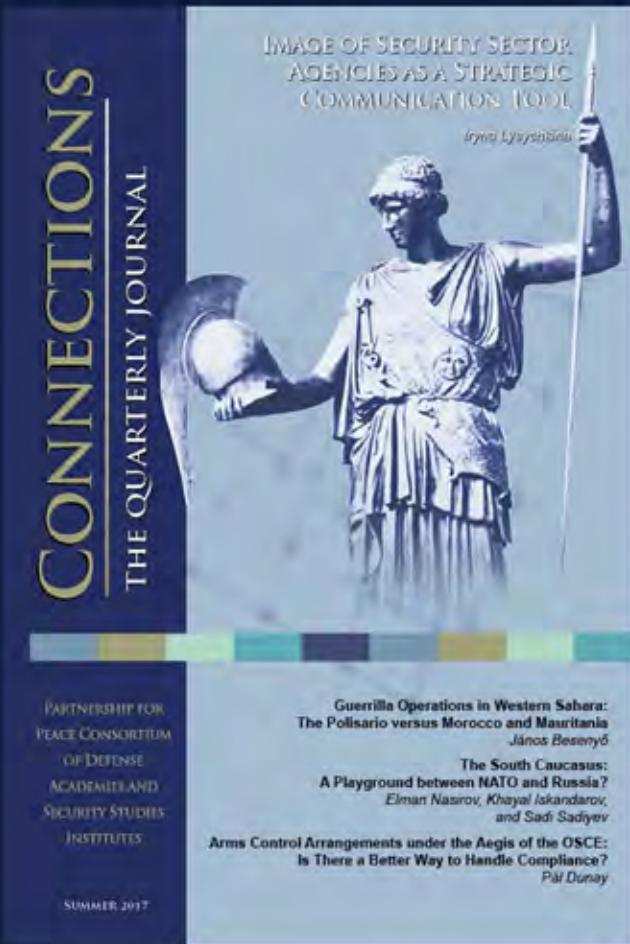 Advances in sensors, communications, computing, nano- and bio-technologies, along with new strategies and operational concepts, challenge our policy-making capacity. The Spring 2016 issue of Connections presents the Emerging Security Challenges Working Group of the PfP Consortium and reflections of some of its members on the security and policy imp...
Read More
Advances in sensors, communications, computing, nano- and bio-technologies, along with new strategies and operational concepts, challenge our policy-making capacity. The Spring 2016 issue of Connections presents the Emerging Security Challenges Working Group of the PfP Consortium and reflections of some of its members on the security and policy imp...
Read More